Blog › AI at Work · Field Notes
National AI Skills Forum
Canberra
Future Skills Organisation hosted the National AI Skills Forum at the Hyatt in Canberra on Wednesday 19 August with the National Skills Minister, the OECD, industry peaks, higher education sector leading universities and TAFE/Registered Training Organisations, unions, and technology organisations on one stage. Here's what matters if you train, lead or hire people in Australia.
The short version
Five key takeaways
- A new national definition of skill is being written. Jobs and Skills Australia confirmed from the stage that an AI taxonomy carrying a human-centred definition of skill is in development. It flows into training packages, and from there into every nationally recognised qualification.
- Confidence comes before capability. AI use and exposure in Australia continue to rise, with 77 per cent of Australians reporting they use AI. However, Australia’s EY AI Sentiment Index score is 52 out of 100, well below the global average of 66, reinforcing the gap between use and trust. [EY]
- The risk is moving too slowly, not too fast. Commonwealth data shows no broad AI disruption in the Australian labour market. The opening keynote argued the absence is the problem, not the reassurance.
- The shift to capability. A strong theme repeated across sessions described the same shift: from proving a box was ticked to evidencing that someone can do the job.
- Storytelling of AI use cases was by far the most powerful part of the day. Rangers in Kakadu. GPs in remote WA. Administrative burden removed so people could do the work only they can do. Sharing use cases inspires creativity and leverage into new industries. Storytelling is what moves the needle on adoption.
The day's agenda
Federation Ballroom, Hyatt Hotel Canberra. Around 150 in the room, plus a national livestream.
Convened and supported by
- 8:28am
Welcome to Country
Selina Walker, Respected Emerging Ngunnawal Elder and Leader
- 8:35am
Opening address
Minister for Skills and Training. The framing word for the day: augmentation, not replacement.
- 8:45am
OECD address
A new AI exposure measure across 22 occupation groups.
- 9:15am
Opening keynote
Chris Richardson on the economics. The trust gap, and the cost of moving slowly.
- 9:45am
Panel: the labour market
Government, union and industry peaks on one stage.
- 11:05am
Virtual opening
Sir Richard Branson, Virgin Group
- 11:10am
Panel: redesigning work
Microsoft, Victoria University, Deloitte, Virgin Unite, CommBank, Finance Sector Union.
- 12:05pm
Launch Pad
Five solution pitches to a live audience poll.
- 2:05pm
International keynote
Dr Michael Fung on the system, not the content.
- 2:25pm
Fireside: training to transformation
Jobs and Skills Australia confirms an AI taxonomy carrying a new definition of skill.
- 2:50pm
The institutional rethink
Professor Martin Bean, former Vice-Chancellor of RMIT and The Open University.
- 2:50pm
Panel: future ready
Competency to capability, named outright.
- 4:05pm
Government closing address
Minister for Employment and Workplace Relations
- 4:20pm
Closing reflections
Future Skills Organisation and the National AI Centre
The Minister for Skills and Training, The Hon. Andrew Giles MP, opened with one phrase, and it held for the rest of the day: augmentation, not replacement.The National AI Plan's priorities were to become agreed national actions and public commitments. Government, higher education, unions and industry peaks shared a stage, contributing to the acceleration of Australia's national AI skills agenda.
Redefining 'Skill'
A new national definition of skill is being written now.
The most consequential disclosure of the day came in a 25-minute fireside chat rather than a keynote. Megan Lilly, Acting Commissioner of Jobs and Skills Australia, confirmed that JSA has an AI taxonomy in development and that it carries a new definition of the term skill, framed as human-centred. She appeared with Dr Michael Fung, formerly Deputy Chief Executive (Industry) at SkillsFuture Singapore and now Executive Director of the Institute for the Future of Education at Tecnologico de Monterrey.
Fung's own keynote made the same argument one level up. His question to the room: what if Australia's largest AI skills challenge is not the training content, but the system that delivers it? Singapore already operates a live national skills framework with an AI taxonomy inside it. It is the closest working precedent to what Australia is preparing to publish.
Described the change as a move from competency to capability, and confirmed a new, human-centred definition of skill is in development.
Why this matters if you have never opened a training package
A national definition of skill doesn't stay in a policy document. It flows into training packages. Training packages set qualifications. Qualifications set what your new hires arrive knowing, what your existing staff can be funded to learn, and what an assessor is allowed to sign off. Change the definition and you change all of it, one release at a time.
Heavy users. Reluctant believers.
The trust gap is not a communications problem. It is the training opportunity.
77%
of Australians use AI
Cited in the opening keynote
13.6m
Australians using AI in an average four weeks
Roy Morgan
22nd
of 22 countries for AI sentiment - equal lowest
EY AI Sentiment Index
EY AI Sentiment Index, score out of 100.
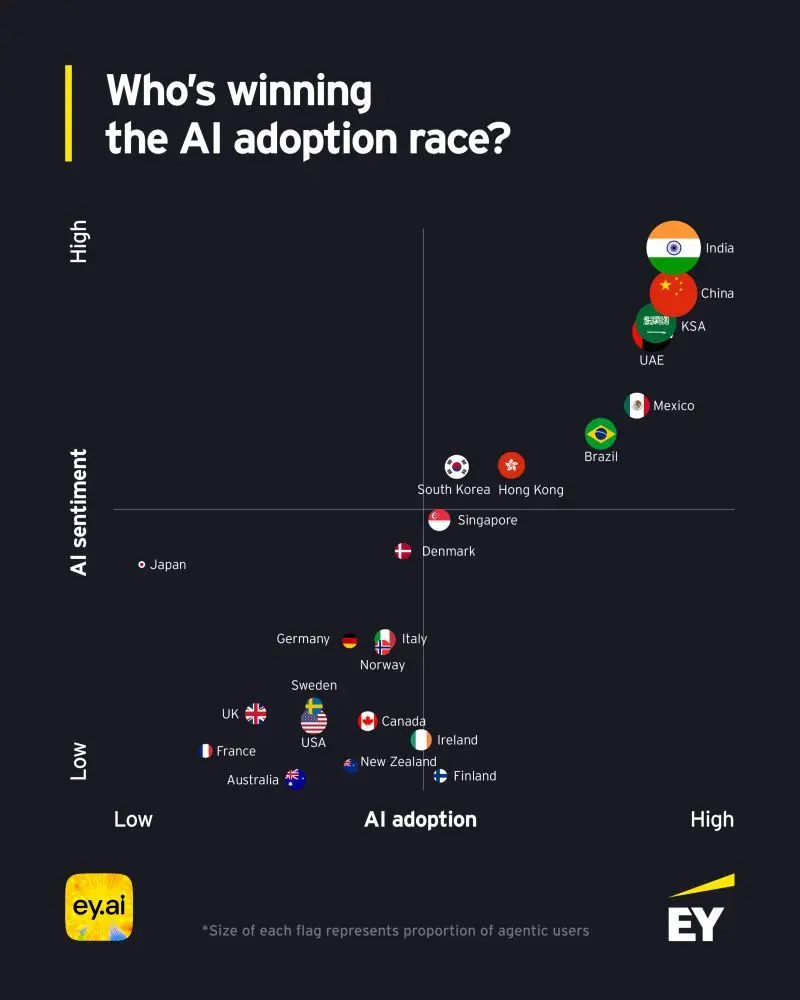
Source: EY AI Sentiment Index, as cited at the forum, 19 August 2026
Chris Richardson opened the keynote with that gap and made no attempt to smooth it over. Australians are heavy users and reluctant believers at the same time.
The second half of his argument was the more useful one. The Department of Employment and Workplace Relations report AI and Employment in Australia, released in July 2026 with data to February 2026, found no broad AI-driven disruption: unemployment at 4.4 per cent, participation near record highs, youth and graduate employment resilient, and software development roles up 25 per cent since late 2022. His reading of it was the opposite of comforting. The absence of measurable impact is itself the problem. The risk is not that AI moves too fast; it is that Australia moves too slowly. The case for acting now rests on preparedness, not crisis.
Three speakers, one sequence, no coordination
Dept of Industry, Science and Resources
Told the room to use it, confidence first, then capability, alongside a $30 million investment in the AI Safety Institute.
30,000 people trained, with the stated priority being confidence rather than tooling.
I'm over the debate about whether AI is good or bad. It's here.
The occupations AI has not caught up to
Twenty-two occupation groups, scored against nine human capabilities.
Stijn Broecke, Senior Economist at the OECD and lead of its Future of Work initiative, presented a new AI exposure measure summarised as a catch-up index: how far AI still has to travel to match human performance. A higher score indicates a more insulated occupation.
OECD catch-up index, selected occupation groups. Higher means more insulated.
Source: OECD, presented at the National AI Skills Forum, 19 August 2026
The pattern is consistent. Work that runs on relationship, judgement and physical presence is the work AI has furthest to travel to reach. Work that runs on processing structured information is not.
One skill sat at the top of both OECD employer surveys, the algorithmic management survey and the generative AI survey: data interpretation. For anyone deciding which single capability to layer across every role, that is the evidence-backed candidate.
Broecke repeated his own caveat, and it belongs here too: the measure shows correlation, not cause. The decline in United States administrative employment began decades before generative AI existed.
Employment growth since November 2022, by AI exposure.
Source: Department of Employment and Workplace Relations, AI and Employment in Australia, July 2026
From ticking the box to proving the judgement
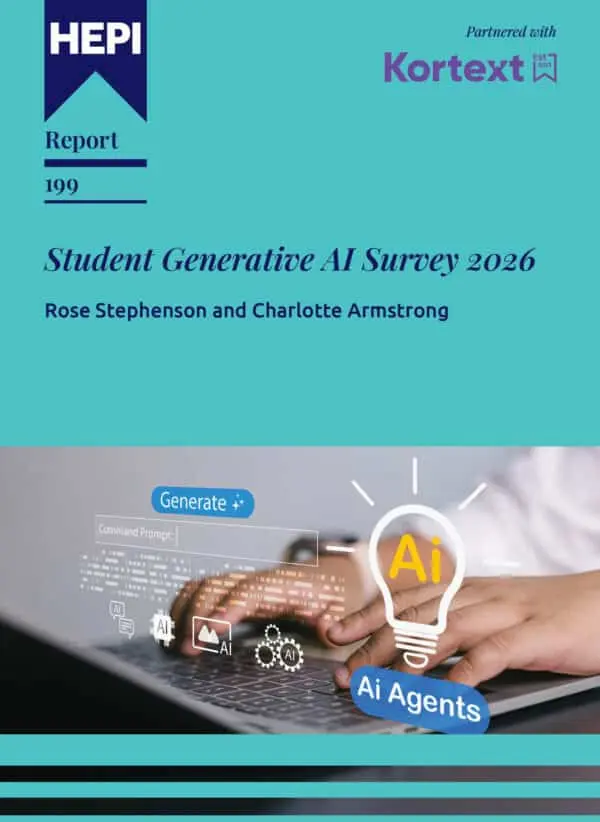
Professor Martin Bean CBE AM, former Vice-Chancellor of RMIT and The Open University, drew his starting evidence from the Higher Education Policy Institute Student Generative AI Survey 2025.
Undergraduates using generative AI for assessments.
Source: HEPI Student Generative AI Survey 2025. Ninety-two per cent report using AI tools of some kind.
The shifts he argued for
Bean's graduate attributes for an AI world were agency, judgement and adaptability. Judgement is the load-bearing one. It is the ability to recognise when the machine is wrong, and it is the single skill standing between a confident AI answer and a poor decision taken on the strength of it.
The hidden number
Fifty-seven per cent of students report feeling lonely, and students with a strong sense of belonging are 35 times more likely to report a great experience. Belonging is not something wrapped around the delivery model once the content is built. It is the delivery model, and it's the part no tool does for you.
The four key risks discussed
01
Cognitive offloading
Named on the closing panel as the live risk in AI-assisted learning. Where the tool does the thinking, the capability the training was designed to build does not form. The response is not to ban the tool. It is to design assessment that evidences the thinking, not only the output.
02
Shadow AI
The panel was asked directly about staff using personal AI tools alongside the organisation's. The position put was pragmatic: AI is a tool in the toolkit and it is portable to the employee. Build the skill in both places, and write a policy that acknowledges the tool already in the room.
03
Governance as an enabler
Design policy and procedures that enable AI adoption. Provide training and environments for learning, experimentation and capability uplift across the workforce. Build confidence, then capability.
04
Digital Inclusion Index
Around one in five (20.6%) Australians are digitally excluded or highly excluded, and roughly one in ten (9.2%) are highly excluded. Rates of exclusion are much higher for people aged 75 and over (66.5%), those who did not complete secondary school (54.5%), public housing residents (45.2%) and First Nations people (40.9%). Source: Australian Digital Inclusion Index.
Australian Digital Inclusion Index - national dashboard Interactive national data on who is connected, who is not, and the gap in between - by age, income, education and region. Explore the dashboard →The best AI in the room was not a chatbot
Two examples of augmentation, not replacement, where it is already real.
Dr Kyle Turner, Senior Impact and Research Fellow at Victoria University, spoke on the Redesigning Work panel about Indigenous digital inclusion and gave the day its two most concrete examples.
Kakadu
Rangers photograph and film what they see in the field. That footage is analysed with AI for fire management and endangered species monitoring, with Traditional Owners involved in the work. The effect on the job is the point: less time writing up, more time on Country.
Source: NESP Healthy Country Indicators
Interpreters in patient care
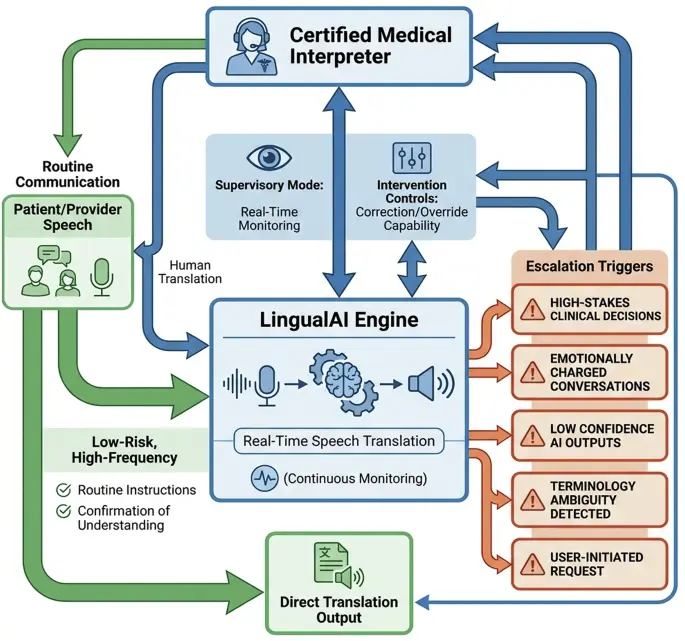
AI translating Noongar language into English for doctors in clinical settings. Language, health and technology in a single use case, and a patient understood properly at the moment it matters most.
Image source: Nature
Augmentation in practice
Neither is AI replacing humans. This is AI as a tool to increase productivity, remove administrative burden, and provide better outcomes. More of these stories need to be shared. Storytelling and the sharing of real use cases is what moves the needle on adoption, and it does more for confidence than any feature list.
So where to from here
Book the free training
One million fully subsidised AI microskill scholarships are available through the National AI Centre and TAFE NSW's Institute of Applied Technology - Digital, announced in December 2025. No cost, and the fastest way to give a team a shared floor to stand on.
TAFE NSW Institute of Applied Technology - Digital The AI microskill scholarships live here. Browse the catalogue and enrol directly. Visit site →Run the confidence session before the tool session
Where the data goes, what the tool cannot do, what happens when it is wrong. Then show the prompt. Teams that trust the boundaries use the tool. Teams that do not, quietly do not, and you find out at renewal.
ai.gov.au - practical guides and training The Australian Government's public reference point for AI guidance, training and resources. Visit site →Read the Singapore skills framework
It already runs an AI taxonomy inside a live national skills system, and it is the closest working precedent to what Australia is preparing to publish. Reading it now means reading the Australian version with informed eyes.
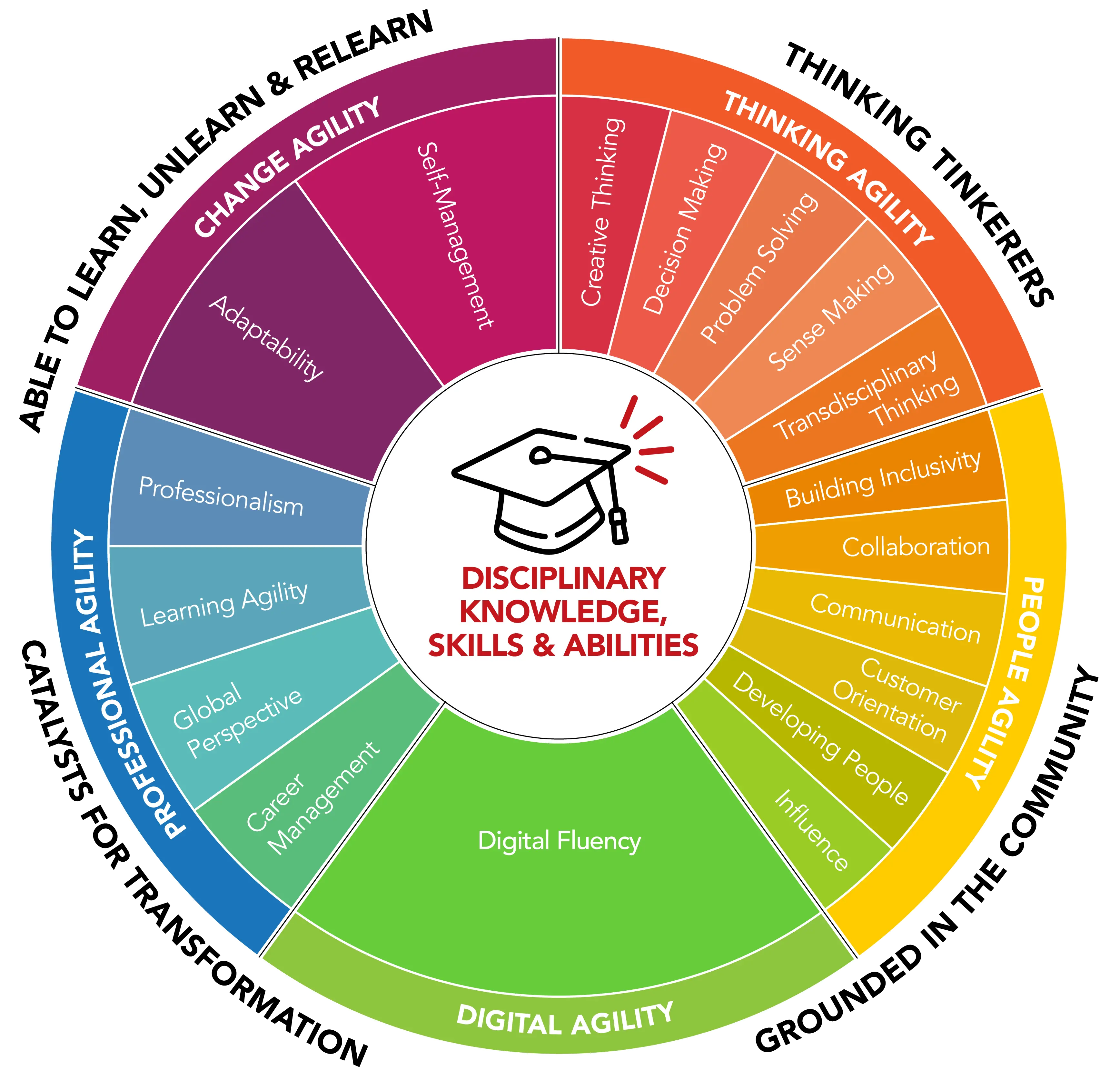
Sources: Singapore Skills Frameworks · Singapore Institute of Technology
Need this turned into a plan?
We translate national policy into augmented AI tools for workforce capability, data governance and AI adoption.
Start a conversationQuestions people ask
What was the National AI Skills Forum 2026?
A national convening on Australia's AI workforce agenda, held in Canberra in August 2026 and presented by the Future Skills Organisation and the National AI Centre. It was supported by the Department of Employment and Workplace Relations, the Department of Industry, Science and Resources, Microsoft, LinkedIn, CommBank, Amazon Web Services and Deloitte. Fifty-five speakers presented. Held at the Hyatt Hotel Canberra on Wednesday 19 August, it focused on turning the National AI Plan's priorities into agreed national actions and public commitments.
Is AI taking Australian jobs yet?
Not in the aggregate. The Department of Employment and Workplace Relations report AI and Employment in Australia, released in July 2026 with data to February 2026, found no broad AI-driven disruption: unemployment at 4.4 per cent, participation near record highs, and software development roles up 25 per cent since late 2022. The watch item is a gradual divergence rather than a shock. Occupations most exposed to AI grew 5.6 per cent since November 2022, against 9.5 per cent for the least exposed, with the difference concentrated in clerical and administrative roles.
What is the JSA AI taxonomy?
The Jobs and Skills Australia (JSA) Artificial Intelligence (AI) Taxonomy is a classification of AI-related skills in development at JSA, confirmed at the forum and not yet released. It carries a new definition of the term skill, framed as human-centred. It matters beyond policy circles because national definitions of skill flow into training packages, and training packages set what every nationally recognised qualification teaches and assesses.
What does confidence before capability mean in practice?
It describes a sequence. Start with trust: where the data goes, what the tool can't do, and what happens when it produces something wrong. Tool skills follow. Build confidence in people first, rather than tooling, as the priority.
Where can I get free AI training in Australia?
One million fully subsidised AI microskill scholarships are available through the National AI Centre and TAFE NSW's Institute of Applied Technology - Digital, announced by the Australian Government in December 2025. The government's public reference point for AI resources is ai.gov.au. The Office of AI now sits within the Prime Minister's portfolio.
What is the difference between AI literacy and AI capability?
Literacy is understanding what the technology is, what it does and where it fails. Capability is completing a real job of work with it, to a standard someone will sign off. The distinction was drawn from the chair at the forum. It matters commercially, because a considerable amount of AI training on the market teaches literacy and is sold as capability.
Sources
- Jobs and Skills Australia, Measuring Employer Investments in Learning: insights, challenges and a pathway forward, JSA Insights, August 2026
- Department of Employment and Workplace Relations, AI and Employment in Australia, July 2026
- OECD, AI exposure and human capability measures, presented 19 August 2026
- EY AI Sentiment Index, as cited at the forum
- Roy Morgan, AI usage estimates, as cited at the forum
- Higher Education Policy Institute, Student Generative AI Survey 2025
- Australian Digital Inclusion Index, national dashboard
- Australian Government, Future-ready workforce: one million Aussies to get free AI skills training, 10 December 2025
- Future Skills Organisation, National AI Skills Forum 2026 program and speaker list